
3 Credit Card Mistakes That Can Hurt Your CIBIL Score

A credit card can be really useful. I use mine for normal spending, online shopping and sometimes for an expense I don’t want to pay immediately from my bank account.
But credit cards can also cause problems if you use them carelessly.
You don’t need to do anything crazy to hurt your CIBIL score. Sometimes small mistakes, repeated every month, are enough to make your credit profile look weaker.
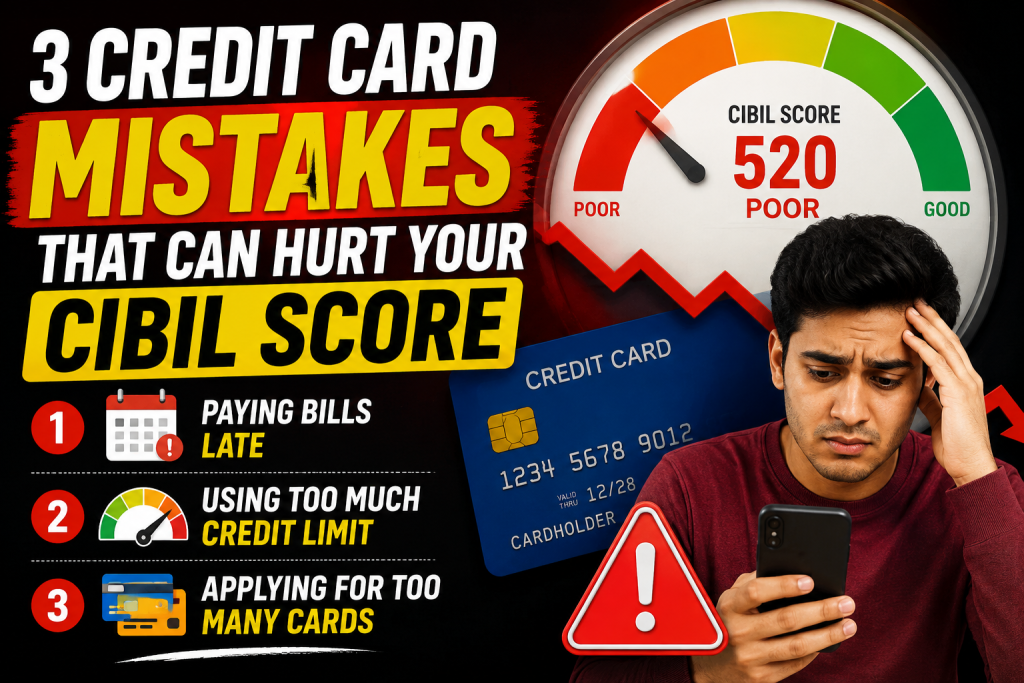
Here are 3 credit card mistakes I’d try to avoid if you want to keep your CIBIL score healthy.
1. Paying Your Credit Card Bill Late
This is probably the biggest mistake.
Your credit card has a payment due date. If you keep missing that date, it can affect your credit history.
CIBIL says payment history is one of the important factors that affects your CIBIL Score. Late payments and defaults can have a negative impact.
For example, suppose your bill is ₹18,000 and the due date is the 15th.
If you keep forgetting to pay it and the account becomes overdue, that’s not something I’d take lightly.
There can also be late payment charges and interest depending on your card and situation.
One thing people get confused about
There is a difference between paying late and paying only the minimum amount.
Your card may show something like:
Total due: ₹18,000
Minimum due: ₹900
You might think:
“Okay, I’ll just pay ₹900 and I’m safe.”
Technically, paying the minimum due can keep the account from being treated as unpaid under the card’s terms. But it doesn’t mean you’ve cleared your bill.
The remaining ₹17,100 can continue to carry interest, and you may also lose the interest-free period depending on the card’s terms. RBI requires card issuers to warn customers about the consequences of repeatedly paying only the minimum amount.
So personally, I try to pay the full bill, not just the minimum.
If you want to understand this better, I also recommend reading the credit card guide on AllAbtFin.
2. Using Almost Your Entire Credit Limit
This is another mistake that is easy to make.
Let’s say your credit card limit is ₹1 lakh.
You spend ₹90,000 on the card.
You haven’t technically done anything wrong just because you spent ₹90,000. But your credit utilisation is now very high.
CIBIL explains that credit utilisation is the amount of your available credit you’re currently using. High utilisation can indicate that you’re becoming too dependent on credit and can negatively affect your score.
Here’s a simple example:
Credit limit: ₹1,00,000
- ₹10,000 used = 10%
- ₹30,000 used = 30%
- ₹50,000 used = 50%
- ₹90,000 used = 90%
If you regularly keep the card close to its limit, I’d be a little careful.
It doesn’t mean you should stop using your credit card.
It just means you shouldn’t treat the entire credit limit as if it’s your own money.
What I personally prefer
If my card has a ₹1 lakh limit, I don’t want to be regularly sitting at ₹90,000 or ₹95,000.
If I have a big purchase coming up, that’s different.
For example, maybe I need to buy a ₹70,000 laptop. I can use the card for it if I know I can comfortably pay the bill.
The problem is when someone keeps spending near the limit every month and then struggles to clear the bill.
That’s when a credit card can become a problem very quickly.
You can also read more credit-card tips on AllAbtFin.
3. Applying for Too Many Credit Cards at Once
Getting a new credit card isn’t automatically bad.
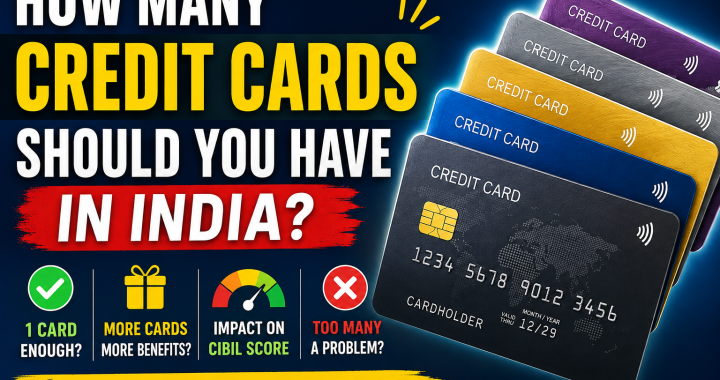
In fact, having more than one card can make sense for some people.
For example, one card might be good for shopping, another might give better rewards on travel, and another could simply be a lifetime-free card that you keep as a backup.
The problem is applying for too many cards within a short period.
When you apply for a credit card, the lender may check your credit report. These credit enquiries are recorded, and CIBIL says multiple enquiries in a short period can make lenders more cautious.
Imagine this:
You apply for:
- Card 1 on Monday
- Card 2 on Wednesday
- Card 3 the following week
- Card 4 a few days later
Maybe you were just trying to find the best card.
But from a lender’s point of view, it can look like you’re suddenly trying to get a lot of credit.
That’s why I wouldn’t apply for every credit card advertisement that appears in my inbox.
First check whether you’re actually eligible and whether the card is useful for you.
If you already have two or three cards that cover your needs, another card may not add much value anyway.
So, How Do You Keep Your CIBIL Score Healthy?
There isn’t some secret trick.
Most of it comes down to using your credit responsibly.
I would keep a few simple habits:
Pay your bills on time.
Don’t wait until the last few hours of the due date. Set up an autopay or reminder if you often forget.
Try to pay the full amount due.
Paying only the minimum every month can leave you carrying debt and paying interest for much longer.
Don’t constantly use your entire credit limit.
A high credit utilisation can work against you.
Don’t apply for cards randomly.
Take a few minutes to compare the card before applying.
Check your CIBIL report occasionally.
If you see something that doesn’t look right, don’t simply ignore it. CIBIL provides a process for raising disputes about inaccurate information on your report.
One More Thing: Don’t Be Afraid of Credit Cards
I’ve seen people go too far in the other direction too.
They hear that credit cards can hurt their CIBIL score and decide they should never use one.
That’s not really the point.
A credit card can actually help you build a credit history when you use it properly.
The problem isn’t the card itself.
The problem is how you use it.
If you spend ₹20,000 on your card and have the money sitting in your bank account to pay the bill, that’s very different from spending ₹20,000 because you don’t have the money and then struggling to repay it.
That’s the difference I’d keep in mind.
My Simple Rule for Credit Cards
If I had to reduce everything to one simple rule, it would be this:
Don’t spend on your credit card what you can’t comfortably repay.
Pay your bills on time.
Don’t keep your card maxed out every month.
And don’t apply for five cards just because five banks are offering you one.
That’s honestly enough to avoid many of the common mistakes.
Your CIBIL score is built over time. You don’t need to become obsessed with checking it every week.
Just use credit carefully and give your payment history time to build.
Final word
A good CIBIL score isn’t built by some shortcut.
It’s mostly about what you do with credit over time.
If you already have a credit card, don’t panic because you made one mistake. Just start using it more carefully from now on.
And if you’re thinking about getting your first card, learn how credit cards work before applying. That small bit of knowledge can save you a lot of trouble later.
Related: AllAbtFin – Credit Cards & Personal Finance
This article is for general educational information and isn’t personal financial advice. Credit reporting and lender policies can vary, so check your card issuer’s current terms and your CIBIL report for your own situation.



[…] Related on AllAbtFin: 3 Credit Card Mistakes That Can Hurt Your CIBIL Score […]