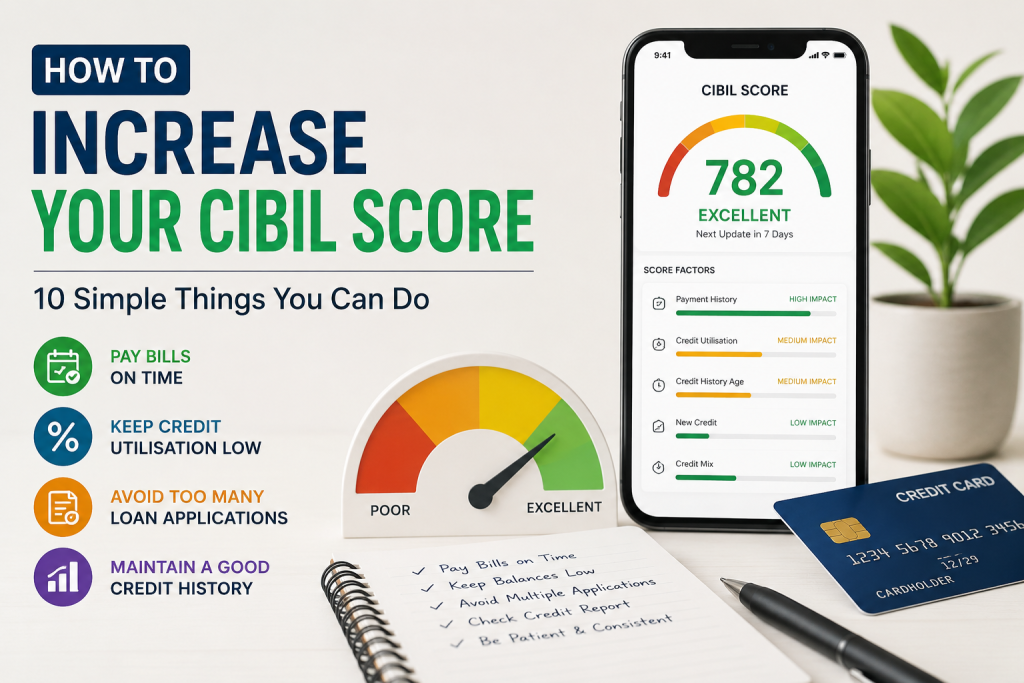
How to Increase Your CIBIL Score: 10 Simple Things You Can Do

A good CIBIL score can make borrowing money a lot easier. Whether you’re planning to apply for a credit card, personal loan or car loan, lenders usually look at your credit history before making a decision.
If your score is already good, the main thing is to protect it. If it’s low, don’t panic. It can improve with better credit habits, although it usually takes some time.
Here are some simple things you can do to improve your CIBIL score.
1. Pay Your Credit Card Bills and EMIs on Time
This is probably the most important habit.
If you have a credit card or loan, try not to miss the payment due date. Your repayment history is an important part of your credit profile, so repeated late payments can make it harder to build a good score.
Setting up an automatic payment or reminder can help if you sometimes forget due dates.
And if possible, don’t wait until the last day to make the payment.
2. Don’t Use Your Entire Credit Card Limit
Having a ₹1 lakh credit limit doesn’t mean you need to spend ₹1 lakh every month.
For example, if your card has a ₹1 lakh limit and you regularly have ₹80,000 or ₹90,000 outstanding, your credit utilisation is quite high.
Try to keep your usage under control and pay your bill on time.
You don’t need to stop using your credit card. Just avoid treating the entire limit as available income.
3. Avoid Applying for Too Many Credit Cards at Once
Getting a new credit card can be tempting, especially when you see cashback, rewards or welcome offers.
But applying for several cards or loans within a short period can result in multiple hard enquiries on your credit report.
One application isn’t something to panic about. The problem is repeatedly applying for credit without really needing it.
If you are planning to apply for a loan soon, it’s better to avoid unnecessary applications.
4. Check Your CIBIL Report for Errors
Sometimes the problem isn’t your spending or repayment habits.
There could be an incorrect entry on your credit report.
For example, you may see:
- A loan you never took
- A payment marked as late when you paid on time
- An account that should have been closed
- Incorrect personal information
- The same loan appearing more than once
If you find something that doesn’t look right, raise a dispute with the relevant credit bureau or lender.
It’s worth checking your credit report from time to time rather than assuming everything is correct.
5. Don’t Close Your Old Credit Accounts Without a Reason
The age of your credit accounts can be useful when you’re building a credit history.
So if you have an old credit card that doesn’t cost you anything and you’re managing it properly, there may not be a reason to close it simply because you don’t use it very often.
That doesn’t mean you should keep every card forever.
If a card has an expensive annual fee and provides no real benefit, closing it may still make sense. Just consider how it fits into your overall credit history before making the decision.
6. Keep Your Outstanding Debt Under Control
Having several loans and large credit card balances at the same time can put pressure on your finances.
Even if you never miss an EMI, too much outstanding debt can make it harder to manage your money.
Before taking another loan, look at your existing EMIs and monthly expenses.
Ask yourself a simple question:
Can I comfortably afford another EMI every month?
If the answer is no, it’s probably better to wait.
7. Don’t Ignore Small Credit Card Dues
A small outstanding amount is still a bill.
Sometimes people think missing a ₹500 or ₹1,000 payment doesn’t matter because the amount is small. That’s not a good habit.
The amount isn’t the main point. Paying your bills on time is.
If you have multiple cards, keep track of all their due dates.
8. Be Careful About Loan Settlements
If you are struggling to repay a loan, a lender may offer a settlement arrangement in some situations.
It can help resolve an immediate financial problem, but a settled account can have a negative impact on how lenders view your credit history.
If you’re having trouble with your EMI, talk to the lender and understand your options before agreeing to a settlement.
9. Keep Your Credit Mix Healthy
Your credit report can contain different types of credit, such as credit cards, personal loans, car loans and home loans.
Having different types of credit can be part of a healthy credit profile, but don’t take a loan just to create a credit mix.
Taking on debt you don’t need simply to increase your CIBIL score doesn’t make financial sense.
It’s better to manage the credit you already have properly.
10. Give Your Score Some Time
This is something people often forget.
You can’t usually fix a poor credit history overnight.
If you have recently started paying your bills on time, reduced your credit card balances or corrected an error on your report, give the changes some time to reflect.
Keep doing the right things every month.
A good credit score is more about consistent habits than finding one trick that suddenly increases your score.
How Long Does It Take to Improve a CIBIL Score?
There isn’t one fixed answer.
It depends on why your score is low in the first place.
If the problem is high credit utilisation, bringing down your balances may help over time.
If you have missed several payments in the past, rebuilding your credit history can take longer.
And if there’s an error on your report, getting that corrected may help once the relevant information is updated.
So don’t expect your score to jump overnight.
Does Using a Credit Card Help Build CIBIL Score?
It can, provided you use the card responsibly.
For example, you could use your credit card for regular expenses such as groceries or online purchases and then pay the bill on time.
The important part isn’t how much you spend.
It’s how you manage the credit.
Using a credit card and paying the bill on time is very different from spending more than you can afford and carrying a large balance every month.
What Can Lower Your CIBIL Score?
Some common problems include:
- Missing EMI payments
- Paying credit card bills late
- Keeping very high credit card balances
- Applying for too much credit in a short period
- Defaulting on loans
- Having incorrect or unresolved information on your credit report
- Settling credit accounts
You don’t need to avoid credit completely to have a good score.
You just need to manage the credit you already have responsibly.
How to Check Your CIBIL Score
You can check your credit information through TransUnion CIBIL’s official website.
When you check your report, don’t only look at the score.
Go through the accounts listed under your name and check whether the loan amounts, payment history and account status are correct.
That can help you spot a problem before you apply for a new loan or credit card.
Final Thoughts
Improving your CIBIL score isn’t about finding a shortcut.
Pay your bills on time, keep your credit card usage under control, avoid unnecessary applications and check your credit report occasionally.
If your score is low today, that doesn’t mean it will stay that way forever. Credit history is built over time, so focus on making better decisions with every new bill and EMI.
A good credit score is useful, but good financial habits are even more important.