
How to Build a Credit Score From Zero in India

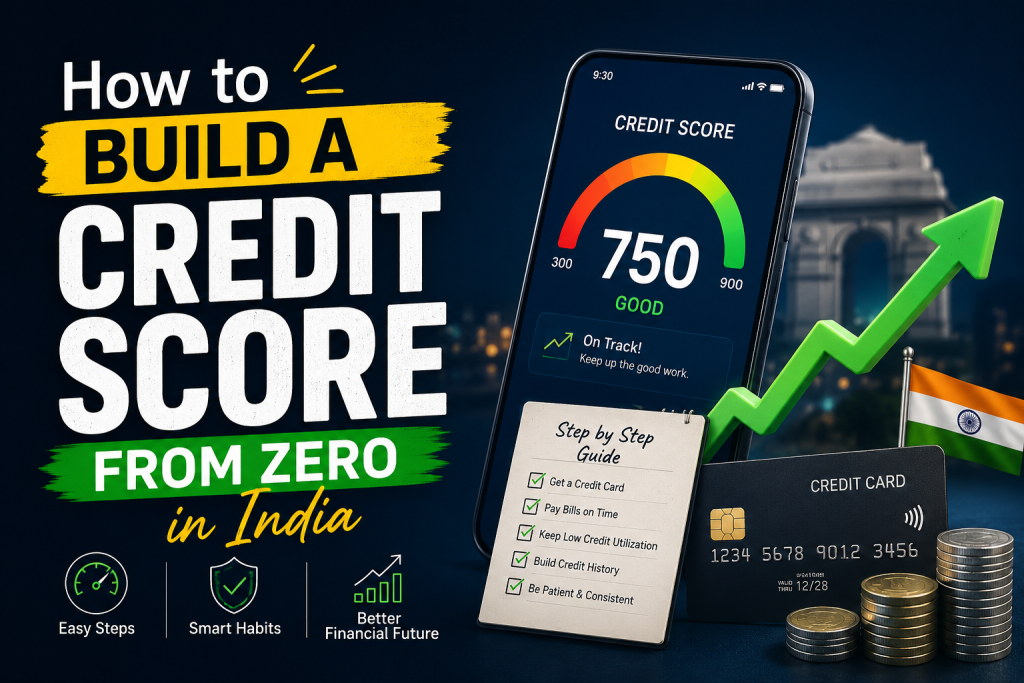
If you’ve never had a credit card or taken a loan, there’s a good chance you don’t have much of a credit history yet.
That’s pretty normal, especially if you’re young.
You may already have a savings account, use UPI every day and pay all your bills on time, but those things don’t automatically give you a credit history. Credit bureaus mainly get information about your borrowing and repayment activity from lenders.
So, at some point, you need to start using credit.
The trick is not to borrow a lot of money. It’s to start with something you can easily manage.
No Credit History Is Not the Same as Bad Credit
These two things are often confused.
Someone with no credit history hasn’t used enough credit for lenders to have much information about them.
Someone with bad credit has a history of problems, such as missed EMIs, late credit card payments or loan defaults.
If you’re new to credit, you’re in the first group.
There’s nothing wrong with starting with no history. You just need to build it over time.
A Credit Card Is One Way to Get Started
For many people, a credit card is the easiest place to begin.
You don’t need to use it for expensive purchases. In fact, I’d do the opposite.
Use it for something you already pay for every month. Maybe your phone bill, groceries or a small online purchase.
Let’s say your card has a ₹20,000 limit. You might only spend ₹3,000 or ₹5,000 on it during the month.
When the bill arrives, pay it on time.
That’s enough. You don’t need to spend ₹20,000 just because the bank has given you that much credit.
What If a Bank Doesn’t Give You a Credit Card?
This happens quite often when someone has no credit history.
One option worth looking at is a secured credit card.
These cards are usually linked to a Fixed Deposit. You put money into an FD and the bank gives you a credit card against it, subject to its rules.
For example, a bank might offer a card against a ₹10,000 FD.
The exact limit, fees and conditions depend on the bank.
For someone who is struggling to get a normal credit card, this can be a practical way to start.
Pay the Bill on Time
This sounds obvious, but it’s probably the most important part.
If your credit card bill is due on the 20th, make sure the payment reaches the card account on time.
You can set a reminder or use autopay so you don’t have to remember it every month.
And if you have enough money to clear the full bill, I’d generally prefer doing that instead of carrying the balance forward.
You don’t need to pay credit card interest just to build a credit history.
Don’t Take a Loan Just for Your CIBIL Score
I’ve seen this advice quite a lot: take a small personal loan, repay it and your CIBIL score will improve.
It sounds simple, but there’s a problem.
A loan costs money.
You’ll pay interest and possibly other charges. If you don’t actually need the loan, taking one just to create a credit history isn’t a very sensible reason to borrow.
If you genuinely need a loan, that’s different. Take only what you need and make sure the EMI fits your monthly budget.
Your repayment history can then build naturally.
You Don’t Need Five Credit Cards
Once you start searching for credit cards, you’ll find plenty of offers.
Cashback cards. Shopping cards. Travel cards. Lifetime-free cards.
It can be tempting to apply for several of them.
I’d keep things much simpler when you’re starting out.
Find one card that you’re eligible for and that suits your spending. Use it properly for a while before thinking about another one.
There is no prize for having the most credit cards.
Don’t Treat Your Credit Limit Like Extra Salary
This is probably the biggest mistake a new cardholder can make.
Suppose your salary is ₹25,000 and your bank gives you a ₹50,000 credit limit.
That ₹50,000 isn’t your money.
It’s the amount the bank is allowing you to borrow.
If you spend ₹45,000 and can’t repay it, you’ll have a much bigger problem than you had before getting the card.
Your credit limit should give you flexibility, not encourage you to spend more.
What About Credit Utilisation?
Credit utilisation basically means how much of your available credit you’re using.
For example, if your limit is ₹50,000 and you have ₹10,000 outstanding, you’re using 20% of the limit.
Keeping your usage under control is a good habit.
You don’t need to obsess over a particular percentage every month, though. The bigger point is to avoid regularly using most of your available limit and struggling to repay it.
Check Your Credit Report
After you’ve started using credit, check your credit report occasionally.
You want to make sure the information is correct.
For example, if you see a loan account that doesn’t belong to you, or an account that you closed but is still showing incorrectly, that’s something you should investigate.
Don’t ignore errors.
Your credit report is basically a record of your borrowing history, so it’s worth knowing what’s actually written there.
How Long Will It Take?
There’s no fixed timeline.
Your credit history develops as lenders report your credit activity and repayments to credit bureaus.
Don’t expect a fantastic score immediately after getting your first card.
You’re building a track record, not trying to pass an exam in one month.
Pay on time, keep your borrowing under control and give it some time.
What If You’re a Student?
Students can have a harder time getting traditional credit cards because they may not have a regular income or established credit history.
A student-specific card or secured credit card may be an option, depending on the bank and your circumstances.
If a parent or family member offers you an add-on card, don’t automatically assume that it will build your own credit history in exactly the same way as having your own primary credit account.
Check with the card issuer if building your individual credit profile is your main reason for getting the card.
Things I’d Avoid
When you’re starting from zero, there’s really no need to make things complicated.
I would avoid taking loans you don’t need.
I wouldn’t apply for several credit cards at the same time.
I wouldn’t spend the entire credit limit just because it’s available.
And I definitely wouldn’t ignore a credit card bill.
The easiest way to build a good history is also the least exciting one: use credit carefully and pay it back on time.
A Simple Starting Point
If you have no credit history today, start small.
Find a credit card you’re actually eligible for. If you can’t get one, look into a suitable secured card.
Use it for normal expenses rather than buying things you can’t afford.
Pay the bill on time.
Keep an eye on your credit report.
Then leave it there and let your history build.
You don’t need to borrow ₹1 lakh to prove that you can handle credit.
Final Thoughts
Building your first credit history in India isn’t really about finding a shortcut.
It’s about creating a record of responsible borrowing.
You can start with a small credit card, a secured card or another credit product that genuinely makes sense for you.
Just don’t borrow money you don’t need.
A good credit score is useful later when you want things like a bigger credit limit, a personal loan or a home loan. But the score itself shouldn’t be the reason you get into debt.
Start small, pay on time and let your credit history grow naturally.


[…] How to Build a Credit Score From Zero in India […]
[…] has a simple guide on how to build a credit score from zero in India, including why starting with small amounts of credit can make more sense than borrowing a lot of […]