How Many Credit Cards Should You Have in India?

There is no magic number when it comes to credit cards.
Some people are perfectly happy with one card. Some keep two or three. And then there are people who have five or six cards because different cards give them different benefits.
But having more credit cards doesn’t automatically mean your credit score will become better.
Actually, if you can’t manage them properly, having too many cards can become a headache.
So how many credit cards should you really have in India?
For most people, 1 to 3 credit cards is more than enough. But the right number depends on your spending, income, credit limit and how well you manage your bills.
Let’s keep it simple.
Do You Really Need More Than One Credit Card?
Not always.
If you have one credit card with a good limit, useful rewards and no unnecessary fees, you may not need another card at all.
For example, suppose your card has a ₹1 lakh limit and you mostly use it for normal shopping, bills and online payments.
If you are happy with the rewards and you pay the bill on time, why get another card?
There is no need to collect cards just because banks keep sending offers.
But having a second card can be useful in some situations.
Maybe your first card doesn’t give good rewards on the things you normally buy.
Maybe you want a separate card for online shopping.
Or maybe you simply want a backup in case your main card doesn’t work.
That’s where having two cards can actually make sense.
Is Having 2 Credit Cards Good?
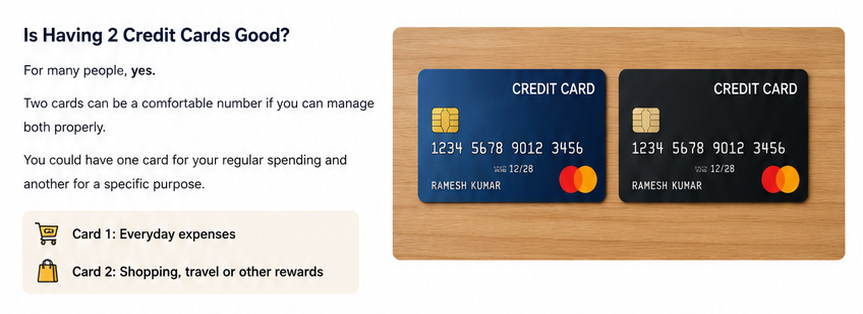
For many people, yes.
I think two cards can be a comfortable number if you can manage both properly.
You could have one card for your regular spending and another for a specific purpose.
For example:
Card 1: Everyday expenses
Card 2: Shopping, travel or other rewards
You don’t have to use both cards every single month.
One can even stay as a backup.
The important thing is remembering that both cards are still credit.
If you spend ₹20,000 on one card and ₹15,000 on another, you have ₹35,000 to pay back.
Having two cards doesn’t mean your income has increased.
That’s something people sometimes forget.
What About 3 Credit Cards?
Three cards can also be fine.
In fact, some people find three cards useful because they can choose the right card for different spending.
For example:
- One card for online shopping
- One card for fuel or travel
- One card for general spending
This can work well if you actually understand the benefits of each card.
But I’d avoid getting a third card just because the bank says:
“You’re pre-approved!”
I’ve seen these offers quite often. They look tempting, but sometimes the card doesn’t really add anything to what you already have.
If your first two cards already cover your spending, another card may just give you another bill to remember.
Does Having More Credit Cards Improve Your CIBIL Score?
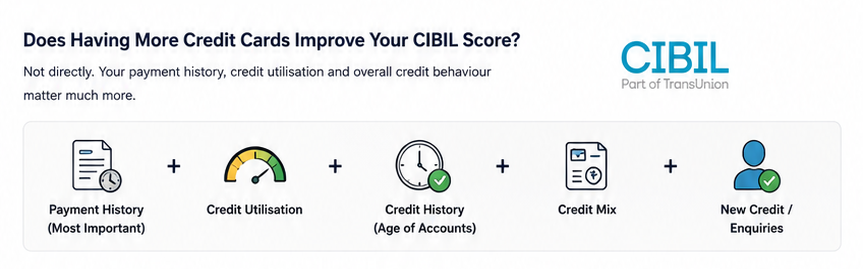
Not directly.
This is something worth understanding.
Simply having five credit cards doesn’t mean your CIBIL score will be higher than someone who has two.
Your credit history, repayment behaviour, credit utilisation and other information in your credit report matter.
CIBIL explains that payment history and credit utilisation are important factors in your credit profile. CIBIL credit score information
So if you have three cards and pay every bill on time, that’s good.
If you have three cards but regularly miss payments, having three cards isn’t helping you.
Actually, it can make things worse.
More Credit Cards Can Give You a Higher Total Limit
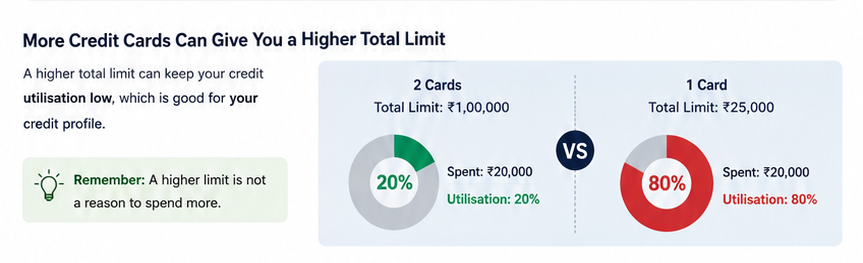
There is one possible advantage of having more than one card.
Let’s say you have:
Card A: ₹50,000 limit
Card B: ₹50,000 limit
Your total available credit is ₹1 lakh.
If you spend ₹20,000 in a month, your overall utilisation is around 20%.
That’s different from having only one ₹25,000-limit card and spending ₹20,000 on it.
In the second case, you’re using 80% of the available limit.
Credit utilisation is one reason some people like having more than one card.
But don’t misunderstand this.
A higher credit limit is not a reason to spend more.
If your limit increases from ₹50,000 to ₹2 lakh, your salary hasn’t suddenly increased to ₹2 lakh.
The bank has only given you access to more borrowed money.
What Is a Good Number of Credit Cards for Beginners?
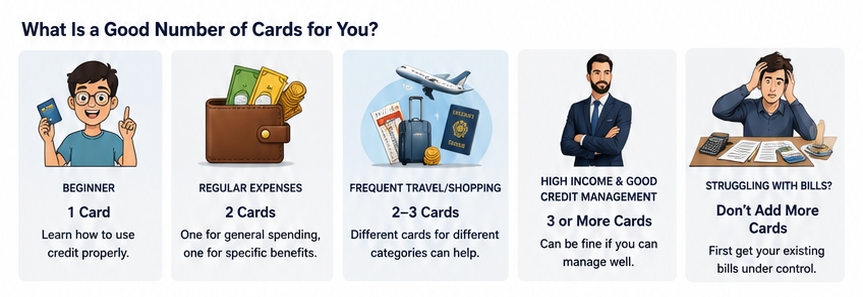
If you’re just getting started with credit cards, I’d keep things simple.
One card is enough.
Learn how the billing cycle works.
Understand the statement.
Know the due date.
Pay the full amount on time.
See how much you actually spend.
After using the card for some time, you may realise that another card could be useful.
That’s a much better way of doing it than applying for three cards at the same time.
Your first credit card should teach you how credit works, not make your finances confusing.
What If You Already Have 4 or 5 Credit Cards?
If you already have four or five cards, don’t worry just because the number sounds high.
Having several credit cards is not automatically a bad thing. What matters is whether you can handle them without getting into trouble.
For example, if all your bills are paid on time, you know which card you’re using and you aren’t carrying a large unpaid balance from month to month, there may be no real problem.
The trouble usually starts when you stop keeping track.
You might forget a payment date. You may pay an annual fee for a card you hardly use. Or you may have three cards sitting in your wallet that you don’t even remember why you got.
If that’s happening, I’d take a step back and look at all your cards.
You don’t have to keep a credit card forever just because you got it a few years ago.
Should You Close a Credit Card You Don’t Use?
This one needs a little more thought.
I wouldn’t close an old card immediately just because you haven’t used it recently.
Before doing that, look at a few things.
Does the card have an annual fee?
Is it actually lifetime free?
How old is the card?
Does it still give you any useful benefit?
And how much of your total credit limit will disappear if you close it?
For example, suppose you have three cards with a combined limit of ₹3 lakh and you close one card with a ₹1 lakh limit. Your available credit will drop to ₹2 lakh.
That can change your credit utilisation if your spending stays the same.
An old credit card can also be useful because it forms part of your credit history.
So I wouldn’t close a card without checking these things first.
On the other hand, if you’re paying a yearly fee for a card you never use, keeping it open just because it’s old may not make much sense either.
Look at the cost and the benefit before making the decision.
So, How Many Cards Are Enough for You?
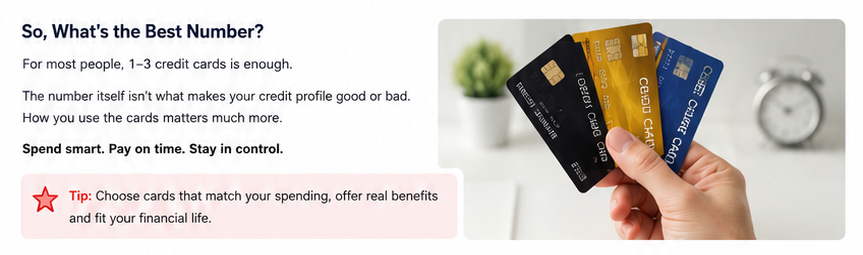
This really depends on your situation.
If you’re getting your first credit card, one card is enough. Use it for a while and get comfortable with paying the bill and understanding your statement.
If you spend regularly and another card gives you better cashback or rewards, two cards can be useful.
Someone who travels a lot or shops heavily in different categories might find two or three cards useful.
Even having more than three isn’t necessarily a problem if you can manage everything properly.
But if you’re already finding it difficult to pay your existing credit-card bills, getting another card isn’t going to fix the problem.
I’d sort out the existing payments first.
Don’t Keep Applying for Cards Just Because You Get Offers
This is something I’d personally avoid.
Banks and credit-card companies send offers all the time. You might get an SMS, an email or see a message in your banking app saying you’re eligible for a new card.
It’s easy to think, “Why not? It’s already approved for me.”
But before applying, stop for a minute and check whether you actually need it.
Applying for credit can result in a hard enquiry on your credit report. A lot of applications in a short period isn’t something I’d recommend.
You can read more about credit enquiries directly from CIBIL’s credit enquiry information.
If you see five card offers in one week, you don’t need to apply for all five.
Compare them properly and pick one only if it gives you something useful.
Honestly, One Credit Card Can Be Enough
There is nothing wrong with having just one credit card.
Sometimes I think people get too caught up in collecting cards.
You don’t need a travel card if you hardly travel.
A fuel card isn’t much use if you rarely spend money on fuel.
And there’s not much point in getting a shopping card just because it gives 5% cashback on a website you visit twice a year.
Look at where your money actually goes.
If one card gives you good rewards, has a reasonable limit and doesn’t charge you an annual fee, you may already have everything you need.
There is no need to add another card just for the sake of having one more.
How I’d Do It If I Was Starting Again
If I were getting my first credit card today, I’d keep it pretty simple.
I’d get one card and use it for normal expenses.
For the first few months, I’d pay the full bill every month and see how much I actually use the card.
After that, I’d look at my spending.
Maybe I’d notice that I spend a lot on online shopping and another card gives better rewards there. In that case, getting a second card could make sense.
If I didn’t find any real benefit, I’d just stick with the first card.
There’s no prize for having ten credit cards.
In fact, having too many can make things harder because you have more statements, more payment dates and more fees to keep an eye on.
What About Those Pre-Approved Offers From Banks?
You’ll probably see these offers sooner or later.
A bank might send you a message saying you’re eligible for a card or that you have a pre-approved offer waiting.
That doesn’t automatically mean you should take it.
Before saying yes, I’d check the annual fee, rewards, cashback conditions, interest rate and other charges.
I’ve also written about this here: Should You Accept a Pre-Approved Credit Card Offer?.
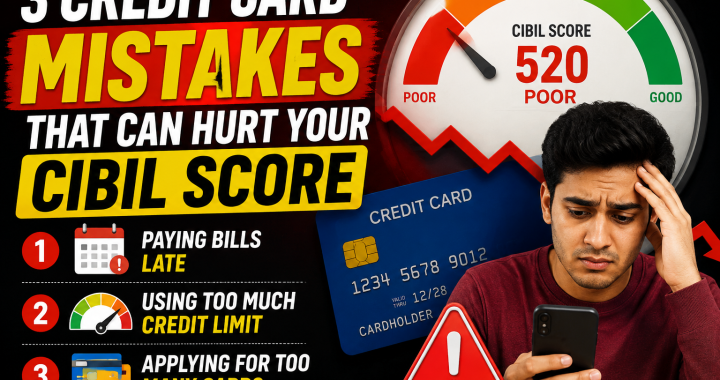
If you’re still getting used to credit cards, this may also help: 3 Credit Card Mistakes That Can Hurt Your CIBIL Score.
The point isn’t to avoid every new card offer.
It’s just to make sure you’re getting a card because it is useful to you, not because a bank happened to offer it.
So, What’s the Right Number?
If you want a simple answer, I’d say one to three cards is enough for most people.
One card keeps things easy.
Two cards can give you a little more flexibility.
Three cards can work well if each one has a different purpose.
After that, it depends on how well you manage them.
There isn’t a special number that gives you a better CIBIL score.
Someone with one card can have an excellent credit history. Someone with five cards can have a poor one.
The number of cards is only one small part of the picture.
What you do with those cards matters much more.
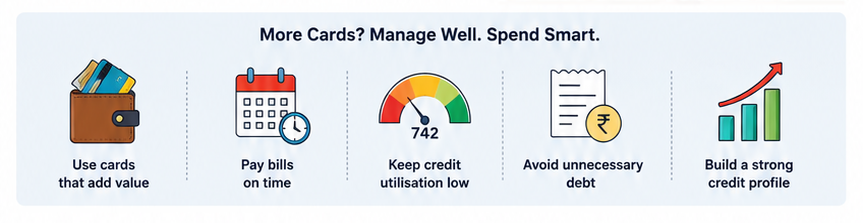
Pay your bills on time. Don’t spend money just because you have a large limit. And try not to carry expensive credit-card debt from month to month.
Those habits are far more important.
My Take
Personally, I wouldn’t chase credit cards just to make my wallet look bigger.
I’d rather have two cards that I actually use than six cards that I have forgotten about.
If one card does everything I need, that’s fine too.
If a second card gives me better cashback or another useful benefit, I’ll consider it.
And if a third card doesn’t really add anything, I don’t see a reason to get it.
That’s probably the easiest way to look at credit cards.
Don’t ask, “How many cards should I have?”
Ask yourself:
“What does this next card give me that I don’t already have?”
If you have a good answer, getting another card may make sense.
If you can’t think of one, I’d probably skip it.
For most people, start with one, add a second when there’s a genuine reason, and don’t keep collecting cards just because banks keep offering them.
Credit-card fees, rewards, eligibility rules and other terms can change. Check the latest details with the card issuer before applying.