How to Get a Credit Card at 18 in India?

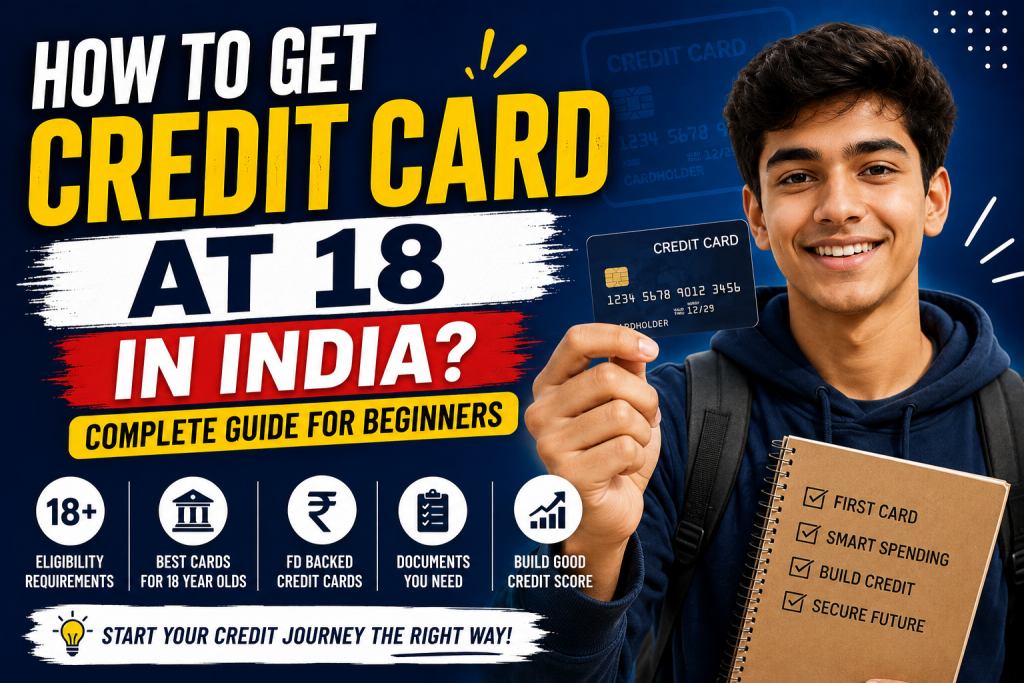
Turning 18 feels like a big thing.
You can open accounts in your own name, start working, make your own financial decisions and, yes, you can also start looking at credit cards.
But there is one small problem.
Being 18 does not mean every bank will give you a credit card.
This is where many young people get confused.
You may see a credit card that says the minimum age is 18, but when you actually apply, the bank may still reject the application because you don’t have an income, credit history or the other requirements they are looking for.
So if you are 18 and want your first credit card, what should you actually do?
Let’s keep it simple.
Can You Get a Credit Card at 18?

Yes, it is possible.
But your options may be limited.
Some banks and card products allow applications from people who are 18 or older. Other cards have a higher minimum age.
For example, SBI Card currently lists 21 as the minimum age for its regular credit-card applicants. HDFC Bank’s current credit-card policy also lists 21 years as the minimum age for its standard card products.
So you shouldn’t assume that every credit card is available as soon as you turn 18.
The bank also looks at things like your income, employment, credit history and its own eligibility rules.
And that’s usually the bigger problem for an 18-year-old.
You may be old enough, but you may not have enough financial history yet.
Why Is It Difficult to Get a Credit Card at 18?
Think about it from the bank’s side.
A credit card is basically borrowed money.
The bank gives you a credit limit and expects you to pay it back later.
Now imagine you’re 18, you just finished school, you don’t have a regular salary and you’ve never used credit before.
The bank has very little information about how you will handle the money.
That’s why getting a normal unsecured credit card can be difficult at this age.
It doesn’t mean you have done anything wrong.
You just don’t have much credit history yet.
The Easiest Option: A Credit Card Against an FD

If you are 18 and don’t have a salary or credit history, I’d look at secured credit cards first.
These cards are usually given against a Fixed Deposit.
You put some money into an FD with the bank, and the bank gives you a credit card against it.
This makes things easier for the bank because the FD acts as security.
For example, ICICI Bank currently offers a Student Credit Card for students above 18 and says it can be obtained against a fixed deposit starting at ₹10,000, with the credit limit going up to 90% of the FD amount.
There are also other secured-card options in India.
IDFC FIRST Bank, for example, offers a secured credit card linked to a fixed deposit. Its card agreement says the credit limit can be up to twice the FD amount, subject to the bank’s rules.
The exact amount, limit and charges depend on the card.
So always check the current terms before putting your money into an FD.
What Is a Secured Credit Card?
The name sounds complicated, but it isn’t.
Suppose you have ₹20,000 that you don’t need immediately.
You make an FD with the bank.
The bank then gives you a credit card based on that FD.
You use the card normally, just like any other credit card.
You still have to pay your credit-card bill.
The FD isn’t there so you can spend the money twice.
It is basically security for the bank.
And that’s why secured cards can be useful for someone who is young and doesn’t have much credit history.
Can a Student Get a Credit Card at 18?
Yes, some student-focused cards are available.
ICICI Bank, for example, says its Student Credit Card is intended for students who may not be employed or have a credit history, and eligibility generally starts above 18.
This can be a better route for a college student than applying for a premium card meant for salaried people.
But again, don’t assume every student card works the same way.
Check:
- Minimum age
- Whether an FD is required
- Minimum FD amount
- Credit limit
- Joining fee
- Annual fee
- Eligibility conditions
The details can change.
Do You Need a Salary?
Not necessarily.
This depends on the card.
For a regular unsecured credit card, having a stable income can make a big difference because the bank wants to know that you can repay what you spend.
Some banks also have specific income requirements.
For example, ICICI Bank says its general credit-card applicants are usually considered from 21 years and may need a minimum annual income, while its student card does not use the same income requirement.
So if you’re 18 and don’t have a job yet, don’t waste your time applying for cards that are clearly meant for salaried customers.
A secured or student card may make more sense.
What Documents Will You Need?
The exact documents depend on the bank and card.
But you should generally be ready with things such as:
- PAN card
- Aadhaar or another identity document
- Address proof
- Mobile number
- Bank details
- KYC information
Some cards may ask for income documents if income is part of the eligibility criteria.
If you’re applying for a card against an FD, you’ll also need to create the required fixed deposit.
For example, ICICI’s student-card information lists PAN/Aadhaar and address proof among the documents, while income proof isn’t required for that particular student card.
What If I Have No CIBIL Score?
That’s normal at 18.
You don’t need to already have a perfect CIBIL score before getting your first credit card.
In fact, one reason people use a credit card responsibly is to start building a credit history.
But don’t get a card thinking:
“I have a credit card now, so my CIBIL score will automatically become good.”
It doesn’t work like that.
Your repayment behaviour matters.
If you spend ₹5,000 and pay the bill properly, that’s one thing.
If you spend ₹5,000 and keep missing payments, that’s a completely different story.
Your First Credit Card Should Be Boring

Honestly, I think this is good advice for anyone getting their first card at 18.
Don’t worry too much about getting the fanciest credit card.
You probably don’t need airport lounge access.
You probably don’t need a premium travel card.
And you definitely don’t need a card with a huge limit just because it looks impressive.
Your first card should be simple.
You should be able to understand:
- How much you can spend
- When your bill is generated
- When you need to pay
- What happens if you miss the payment
- What fees are charged
- How much interest is charged if you don’t pay in full
That’s enough to start with.
Start With Small Spending
If you get your first credit card at 18, don’t suddenly start spending ₹20,000 just because the bank gives you a ₹30,000 limit.
Use it for things you were already going to buy.
Maybe your phone bill.
Online shopping.
Food.
College expenses.
Small everyday purchases.
Then pay the full bill when it comes.
That’s a much better way to learn how credit works.
Always Pay the Full Credit Card Bill
This is probably the most important thing in this whole article.
When your credit-card statement arrives, you’ll usually see something called Minimum Amount Due and another amount for the total bill.
Don’t get into the habit of paying only the minimum.
If you can afford it, pay the full amount due before the due date.
Credit-card interest can become very expensive when you keep carrying a balance.
A credit card should be used as a payment tool, not as free money.
That’s especially important when you’re 18 and just starting to manage your own finances.
Don’t Apply for Five Cards at Once
This is another mistake I’d avoid.
You turn 18.
You see five credit-card offers online.
You think, “I’ll just apply for all of them and see which one gets approved.”
I wouldn’t do that.
Every credit-card application can involve a credit enquiry, depending on the lender and application process.
Instead, find one card that you have a reasonable chance of getting.
Apply for that one.
If you get rejected, don’t immediately apply to ten more banks.
First understand why.
Maybe you don’t meet the age requirement.
Maybe you don’t have income.
Maybe the card requires an existing relationship with the bank.
Maybe the lender simply doesn’t have an offer for your profile.
What If Your Parents Already Have a Credit Card?
There is another option worth knowing about.
You may be able to get an add-on card linked to a parent’s primary credit card.
This isn’t the same as having your own independent credit card account.
The primary cardholder remains responsible for the account.
For example, SBI Card says add-on cards can be issued to children and other eligible family members who are 18 or older.
Axis Bank also lists children and siblings aged 18 and above among the people who can receive an add-on card, subject to its conditions.
So if you’re 18 and mainly want the convenience of using a credit card, ask your parent whether an add-on card is suitable.
But understand what it is before using it.
It’s not the same thing as independently getting your own primary credit card.
Should You Get a Credit Card at 18?
This is the part where I’d say: only if you’re ready for it.
Getting a credit card just because you’re legally old enough isn’t a good reason.
If you already understand basic money management and can control your spending, a small credit card can be useful.
You can start learning how credit works.
You can build a repayment history.
And you get the convenience of paying by card.
But if you’re the type who sees a ₹30,000 limit and thinks:
“Great, I have ₹30,000 to spend.”
Then I’d wait.
That ₹30,000 isn’t your money.
It’s the bank’s money that you have to pay back.
How I Would Start at 18
If I were 18 and getting my first credit card, I’d keep it very simple.
First, I’d check whether I qualify for any normal card.
If not, I’d look at a student card or an FD-backed card.
I’d start with a small limit.
Then I’d use the card for regular expenses.
I would not use the entire limit just because it’s available.
Every month, I’d pay the full bill.
After using it for some time, I’d check my credit report and see how my credit history is developing.
Only after getting comfortable with the first card would I think about another one.
There is no rush.
One More Thing About FD-Backed Cards
If you use an FD-backed credit card, remember that your FD is linked to the card.
The exact rules depend on the bank.
For example, IDFC FIRST Bank’s agreement says the bank can place a lien on the fixed deposit linked to its secured card, and there are conditions around the FD until the card is closed or the dues are settled.
So don’t put your emergency money into an FD-backed card without understanding the terms.
If you need that money next week, locking it into an FD may not be a good idea.
What Should You Avoid at 18?
A few things I’d stay away from.
Don’t spend just because you have a credit limit.
Don’t pay only the minimum every month.
Don’t ignore the due date.
Don’t apply for every card you see on Instagram or YouTube.
Don’t take cash advances unless you fully understand the cost.
And don’t think that a credit card is a way to increase your income.
It isn’t.
It’s simply a form of credit.
So, Can an 18-Year-Old Get a Credit Card in India?

Yes, but it depends on the card.
Some regular cards start at 18, while others have a minimum age of 21 or higher. For someone who is 18 and doesn’t have a salary or credit history, a student card, secured card or add-on card may be a more realistic option.
The easiest path isn’t always to find the card with the biggest rewards.
Sometimes it’s just finding a card you can manage properly.
Final Thoughts
Getting your first credit card at 18 can actually be a good learning experience.
Just don’t rush into it.
You don’t need a huge credit limit. You don’t need a premium card. And you don’t need three different cards sitting in your wallet.
Start small.
Use the card for things you can already afford.
Pay the full bill on time.
Keep an eye on your spending.
After a few months, you’ll have a much better idea of whether you even need another card.
For me, that’s the best way to start with credit at 18.
Get the card for the right reason, use it carefully and don’t treat the credit limit like free money.
Credit-card eligibility, fees, FD requirements and other terms can change. Always check the current information on the bank’s official website before applying.