Can You Get a Credit Card Without a Salary in India?

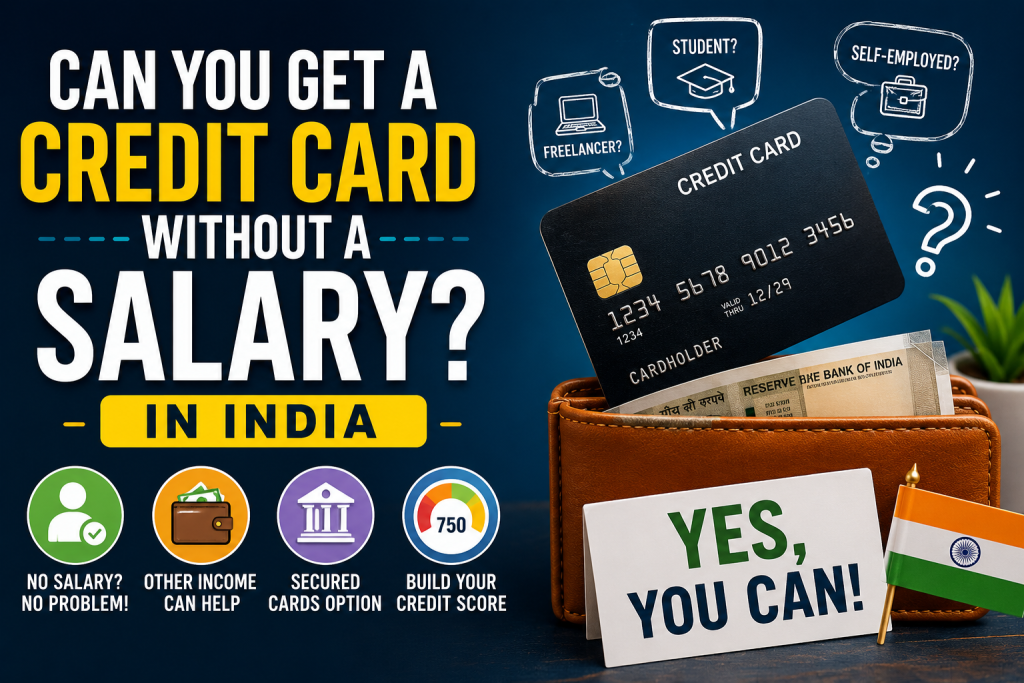
Not having a salary doesn’t automatically mean you can’t get a credit card.
It does make things a little different, though.
When a bank gives you a credit card, it wants some reason to believe that you’ll be able to pay the bill. A monthly salary is one way to show that. But it’s not the only one.
If you’re a freelancer, business owner, student, or earn money from somewhere else, you may still have options. And if you don’t have a regular income at all, there are secured credit cards that you can get against a Fixed Deposit.
So, the answer is yes, but it depends on your situation and the card you’re applying for.
What If You Don’t Have a Salary?
Let’s say you’re earning money from freelancing.
You don’t receive a salary on the 1st of every month, but money still comes into your bank account. A lender may consider that income if you can provide the required proof.
The same can apply to someone running a small business or earning from other sources.
The bank may ask for things such as bank statements, income-tax documents or other proof of income. What they’ll accept depends on the bank and the particular card.
So don’t assume that “no salary” means “no income.”
These are two different things.
The Easiest Option for Many Beginners: A Secured Credit Card
If you don’t have a salary and you’re also new to credit, a secured credit card may be worth looking at.
The basic idea is simple.
You keep money in a Fixed Deposit with the bank, and the bank gives you a credit card against it.
For example, suppose you open a ₹10,000 FD. Depending on the bank and card, you might receive a credit limit linked to that deposit.
You can then use the card like a normal credit card and pay your bill every month.
The FD acts as security for the bank, which is why these cards can be easier to get than some regular unsecured cards.
It’s also one way for someone with little or no credit history to start using credit.
What If You’re a Student?
Most students don’t have a regular salary, so getting a traditional credit card can be difficult.
But that doesn’t mean there are no options.
Some banks have products for students or young customers. A secured credit card can also be an option if you have the money for an FD.
If you’re a student and get a card, though, keep the spending under control.
For example, if you have a ₹20,000 credit limit, there’s no reason to spend ₹20,000 just because it’s available. Using a smaller amount and paying the bill in full is usually a much safer way to handle the card.
What If You’re Self-Employed?
Being self-employed doesn’t mean you can’t have a credit card.
The main difference is that you may not have salary slips to show the bank.
Instead, the bank may look at your other financial documents.
Depending on the card, you may be asked for:
- Bank statements
- Income-tax documents
- Business-related documents
- PAN and KYC documents
- Other proof of income
The exact requirements vary, so check the bank’s eligibility rules before applying.
Your Existing Bank May Have an Option
There’s another thing worth checking if you don’t have a salary.
Look at the bank where you already have a savings account.
If you’ve been using the account for some time, the bank may already have information about your banking relationship. You might even see a pre-approved credit card offer in your mobile banking app.
But don’t accept the first offer you see.
Check the annual fee, interest rate, late payment charges and rewards before you apply. A card being offered to you doesn’t automatically make it a good deal.
Can You Get One With No Income at All?
This is where things get harder.
If you have no salary, no regular income, no credit history and no Fixed Deposit, your chances of getting a normal credit card can be quite limited.
Banks have no easy way to judge whether you’ll be able to repay the money you spend.
In that situation, a secured card may be an option if you can afford to keep money in an FD.
And honestly, if you don’t need a credit card right now, waiting isn’t a bad thing either.
You don’t need to borrow money simply to have a credit card.
What Documents Will You Need?
There’s no single list that applies to every credit card.
Depending on your situation, the bank may ask for:
- PAN card
- Aadhaar or another accepted ID
- Address proof
- Bank statements
- Income proof
- Income-tax documents
- Fixed Deposit details for a secured card
Some banks can complete the application online, while others may ask for additional documents or verification.
Can a Credit Card Help You Build CIBIL?
Yes, it can.
If your credit card account is reported to the credit bureaus, using it responsibly can help you build a credit history.
But there’s a common misunderstanding here.
You don’t need to carry a balance or pay interest to build your CIBIL score.
Suppose you spend ₹5,000 on your card during the month. If you can afford it, pay the full ₹5,000 when the bill is due.
That’s much better than leaving the balance unpaid and paying interest just because you think it will improve your credit score.
Before You Apply, Check These Charges
Don’t look only at whether the card is “free.”
Check the actual terms.
Look at the annual fee first. Some cards are free, while others charge a yearly amount.
Then check the interest rate. This becomes important if you don’t pay the full bill.
Also look at late payment charges, cash withdrawal charges and any conditions attached to the rewards.
If you’re getting a secured card, check how much you need to keep in the FD and how the credit limit is decided.
A few minutes spent checking these details can save you from an unpleasant surprise later.
So, What’s the Best Option?
It really depends on why you don’t have a salary.
If you’re self-employed or freelancing, look for cards that accept alternative income proof.
If you’re a student or new to credit, a secured credit card may be easier.
If you already have a bank account with a good relationship, check whether your bank has an offer for you.
And if you have no income at all, don’t rush into getting a card. A Fixed Deposit-backed card may be an option, but only if you can comfortably set aside that money.
Final Word
You don’t need a traditional 9-to-5 salary to get a credit card in India.
What matters is whether you meet the card’s eligibility requirements and have a sensible way to repay what you spend.
For many people without a regular salary, a secured credit card against a Fixed Deposit can be a simple starting point.
Just remember one thing: the credit limit isn’t your income.
Spend only what you can afford to pay back. That’s much more important than simply getting approved for a card.