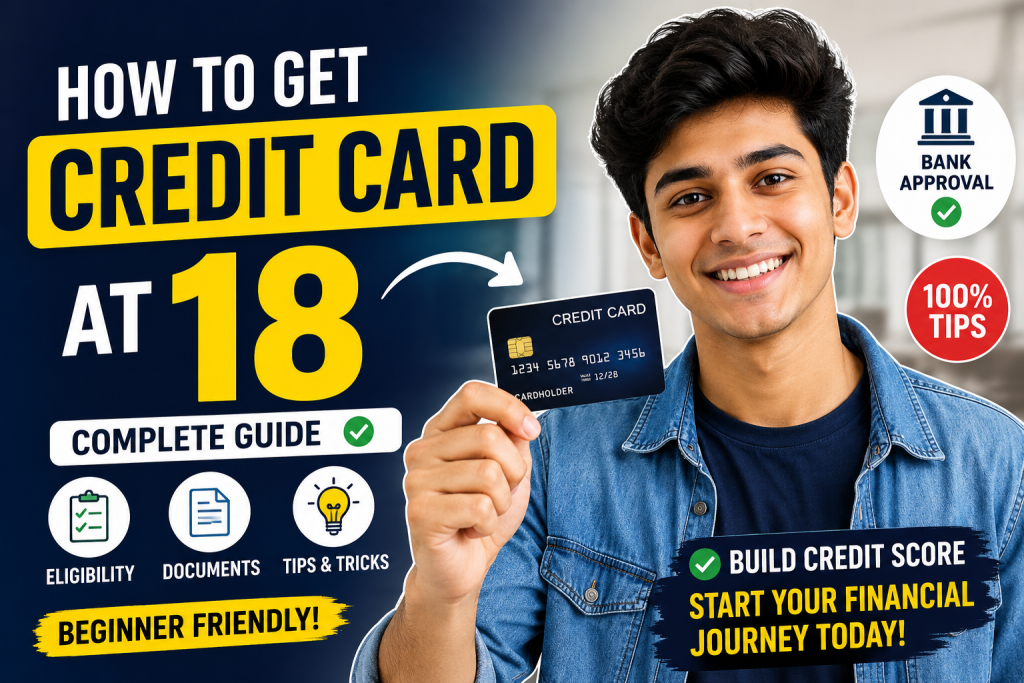
How to Get a Credit Card at 18 in India

Turning 18 feels special.
You finally become an adult, and along with that, you can start managing your own money.
One of the first things people think about is getting a credit card.
But honestly, getting your first card is not always that easy. Many people don’t know where to start or what banks actually look for.
So let’s keep it simple and understand everything step by step.
Can You Get a Credit Card at 18?
Yes, you can.
In India, once you turn 18, you’re allowed to apply for a credit card.
But getting approved depends on a few things.
Banks usually check:
- Do you earn money?
- Do you already have a bank account with them?
- Do you have any credit history?
If you don’t have all this, don’t worry. There are beginner options available.
Who Can Actually Get It Easily?
If you already have income, getting a credit card is easier.
But if you don’t have income yet (like students), you still have options:
- Secured credit card
- Student credit card
- Add-on card from family
So basically, there’s always a way.
What Do You Need to Apply?
Keep these things ready:
- PAN card (very important)
- Aadhaar card or any ID
- Address proof
- Bank details
- Income proof (only if required)
That’s it. Nothing complicated.
Easiest Ways to Get Your First Credit Card
1. Try Your Own Bank
If you already have a savings account, start there.
Sometimes banks give pre-approved cards to their customers.
This is the easiest way.
2. Use Fixed Deposit (Best for Beginners)
This is the safest method.
You create an FD, and the bank gives you a credit card based on that amount.
No tension about income or rejection.
3. Student Credit Card
Some banks give special cards for students.
These cards have:
- Lower limits
- Easy approval
Good option if you’re studying.
4. Add-on Card
You can ask your parents or family.
They can give you an add-on card on their account.
This helps you learn how to use a card properly.
Simple Tips to Get Approved
Just follow these:
- Complete your KYC properly
- Keep some balance in your bank
- Apply for basic cards only
- Don’t apply for too many cards at once
Keep it simple, and your chances improve.
Mistakes You Should Avoid
Many beginners make these mistakes:
- Applying for high-end cards
- Ignoring fees
- Missing bill payments
- Spending too much
- Using full credit limit
These small mistakes can cause problems later.
Will This Help Your Credit Score?
Yes, 100%.
If you use your credit card properly, your credit score will improve.
Just remember:
- Pay bills on time
- Try to pay full amount
- Don’t overspend
- Check your statement
That’s enough.
Final Thought
Getting your first credit card at 18 is a good step.
But don’t treat it like free money.
Use it smartly, and it will help you in the future — for loans, better cards, and financial growth.
Start small, learn slowly, and you’ll be fine.